By Annalee Roustio, Queens College (CUNY) and Jo Christian, Southern Illinois University
May 2026
Dear reader,
We’ve chosen to address our first correspondence to those who will read this blog: the audience we’ve kept in mind even as we’ve written to one another. In “Dear Co-Authors: Epistolary Revelations of Five Writing Center Directors” (2008), authors Geller et al. do exactly this.
Letters, to each other as co-authors and to a broader audience, are the adopted form for their text. The form cultivates creativity, risk, and intimacy between the authors, resulting in a rhetorically “transgressive” (p. 2) piece of writing. It’s that collaboration imbued in the epistolary—the “trickster” implications of both the form and the mode of authorship—that we hope our project underscores (p. 12).
We knew letters would be core to this project. Initially, our exchanges gestured toward our mutual backgrounds in creative writing and how they inform our writing center work. We also met in our MFA program, both of us having come with prior experience and interest in writing centers. Furthermore, we figured our letters could illustrate life for early-career writing center administrators and scholars on different paths. Because letters (and the occasional care package!) were a practice of ours as friends already, particularly after moving apart, epistles felt organic.
It was only through the messy, collaborative process of the whole endeavor, though, through penning our letters to each other, researching, revising, trying, and failing, that our project clarified. Epistolary collaboration was not merely our framework, it was our thesis. We wanted more for readers than to simply peer into our exchanges. We wanted to draw upon the radical possibilities of the epistolary form and, in so doing, call attention to the significance of epistles as meaningful collaborations and affirm the role of epistolary writing in writing centers.
Producing an academic text via epistles, one that models collaboration as it theorizes about it, while encouraging intimacy, artistic expression, and resistance to “presiding dominant institutions” (Kreidler 469)—all of this, we believe, accomplishes the rhetorically disobedient,
unwieldy writing we wanted to perform. Ultimately, we ended up blending our epistles with more traditional essaying. We wrote to each other, and with each other’s help, as a means of communicating to an audience of our colleagues in writing centers and writing studies.
Communicating something, as it turns about, about letters.
It’s meta, we realize. But it’s no surprise that we arrived at a fusion of forms that blends the creative with the scholarly because we embody those exact intersections. Similarly, this form and this collaborative mode insists upon our dialoging, which is precisely what we wish to amplify.
We hope you enjoy. Please do be in touch!
Annalee & Jo
January 2026
Dear Annie,
I hope all is well in your cozy apartment in Queens and your lovely writing center.
Recently, I have been questioning what keeps us coming back to the writing center, especially as creative writers.
When I first began writing center work in 2018, I had no idea what I was walking into. I naturally began to see connections between the work of the writing center workshop and the writing center, especially in that both environments fostered collaboration.
All these years, and an MFA later, I find myself back in the writing center as Assistant Director, completing my PhD in Rhetoric and Composition. And I am still finding ways that the fields of creative writing and writing centers converge, especially in our everyday practices with writers and their writing. One prominent place I see the connection is between the act of writing letters, or epistles, to fellow writers. For example, in creative writing workshops, critiques are usually administered in the form of a letter from the reader to the author. An analogous example in the writing center: a tutor offering feedback asynchronously in the form of a letter.
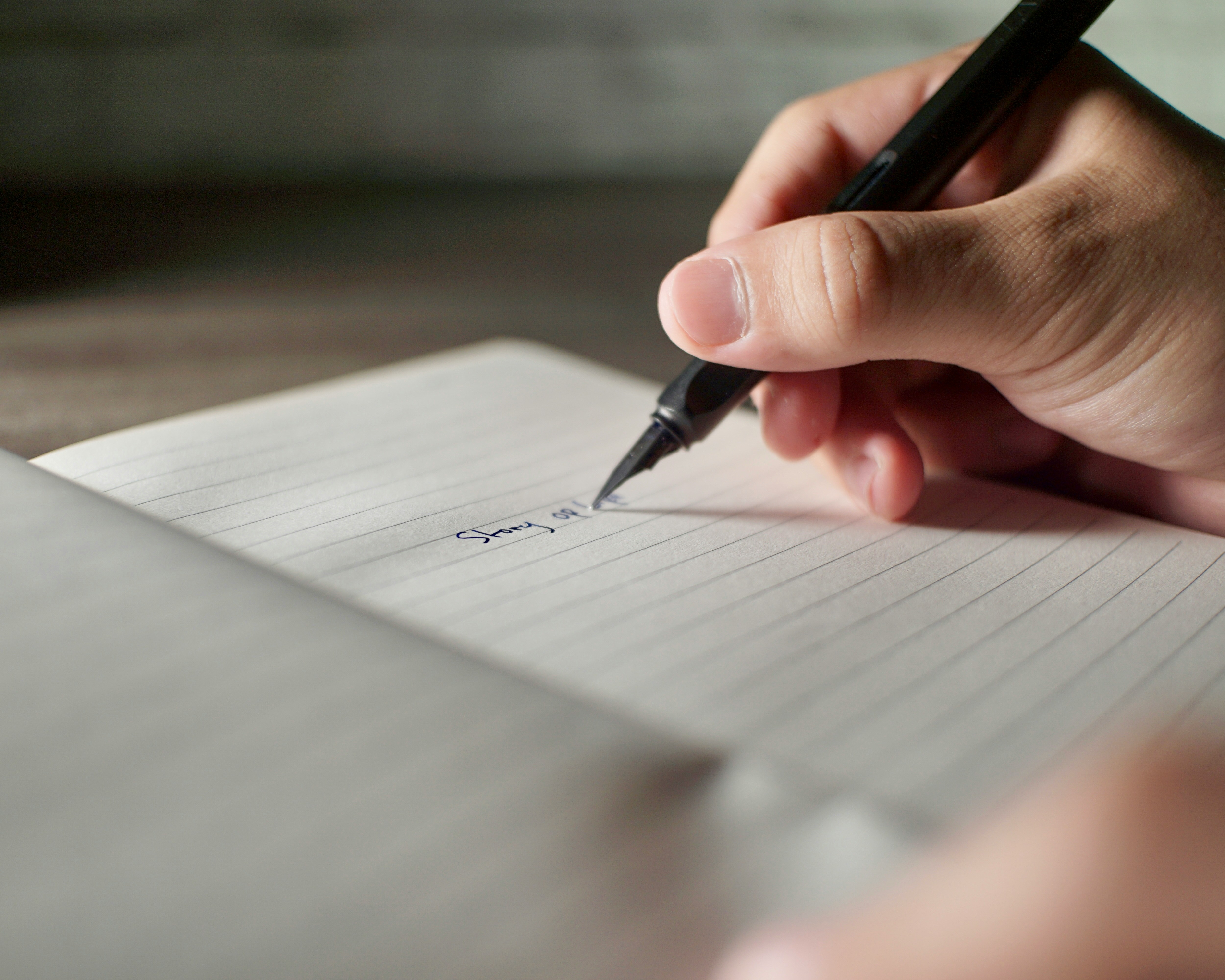
Epistles have maintained dialogues between writers for centuries. Scholars like Anthony Aycock would add that some correspondences “written a certain way…are creative nonfiction” (p. 55) and can be understood as art themselves. And you and I are certainly well-acquainted with epistles as a type of poem. Madeline Cravens describes how epistle poems can act as “vessel[s] for connection” that transcend “binary conceptions of public and private life.”
Those in writing studies have highlighted the important work letter writing does too (Franklin 2020; Johnson 2002; VanHaitsma 2014; Wallace 1995). Scholars such as Margaret Jolly (2008) remind us that epistles can be sites for developing feminist intimacies and political consciousnesses. And while collaboration and co-authorship has been rendered a particularly feminist practice (Ede and Lunsford 1990; Eodice and Day 2003; Grayson 2022), there is also precedent for letters-as-academic writing with political aims, both personal and public. Anne Ellen Geller, Michelle Eodice, Frankie Condon, Meg Carroll and Elizabeth Bouquet used letters to document their collaboration on their book (2008); in Michael Spooner’s introductory letter to their piece, he reminds readers that “[i]ntertextuality doesn’t require us to engage a living, breathing, challenging, changeable human person. Collaborating is altogether different. Like making music together, it builds on, and depends upon, mutual respect, engaged action, flexibility, and vulnerability” (p. 1). Frankie Condon and Vershawn Ashanti Young (2012) as well as Condon and Neisha-Anne Green (2020) have continued to publish in the epistolary, illustrating how letter writing can have anti-racist aims:
This genre enables us, we think, to both discuss and to model the honest, hard, and tender dialogue we believe is necessary to the work of anti-racism[…]the epistolary genre enables us to engage anti-racism from our differing disciplinary positions—writing from where we stand as well as with an openness to change and be changed—even as we conjoin our voices in a single text. (Condon and Green)
Various rhetorical choices, in which the writing represents communal value systems over individual authorship, “can transform academe” (Eodice and Day, p. 8).
I know we’re interested in epistles for their transformative potential and because they enact the intimacy we need right now, especially as our country becomes all the more authoritarian and scary. ICE’s disappearances and separation of families is top of mind, given their record-breaking violence this month (Ramirez 2026).
I also write from a place of grief, as my grandfather, one of my biggest supporters, has recently passed. He was the first person to ever give me permission to think the PhD was possible for me. I am so indebted to his belief in me, even before I could believe in me.
Warmly,
Jo
Sometime in January 2026
Dearest Jo,
I’m so, so sorry to hear of your grandfather’s passing. Sending a big squeeze your way.
I’ve been thinking a lot about creativity, too, even in my sleep. Last night, I dreamt I was at a dinner party and each guest shared what they were opening themself up to in the new year. I volunteered that I was inviting into 2026 a revived creative life.
Now, like you, I was also an all-around writing enthusiast before finding my way to my first writing center circa 2017. Our paths continue to resemble each other from there: once I started my MFA, I quickly plugged into my new institution’s writing center. And now that grad school is behind me, I, too, am working in a writing center again. This is intentional: I adore my work as a writing center administrator. So much that I’m considering comp/rhet PhD programs, another thing we may soon share in common! But my work doesn’t necessarily inspire creativity. On the best of days, it calls upon my disciplinary knowledge and expands my intellect. On many days, though, it feels heavy with bureaucracy and administrative slag. This is to say nothing of ongoing national and international atrocities, as you referenced. My sister is a public school teacher in Minneapolis, and her updates are harrowing.
I guess my point is that even though I also recognize overlap between writing centers and creative writing, I feel it’s been tough to squeeze in creative writing and projects.
You’re probably thinking: aren’t our letters proof of a creative life resurrected, just like the dream prophesied? Maybe they’re not fully or exclusively works of creative writing, in the same way they aren’t fully or exclusively works of academic writing but they’re creations, right?
Epistolary writing can absolutely be creative writing, yeah?
If indeed you are thinking that, you’re right. Epistolary poems and novels have long compelled me, and they’re absolutely creative works. Plus, epistles come naturally to us as “old friends,” as the Chris Stapleton song goes. Side note: remember when our grad program started smack in the middle of COVID-19 lockdown? And, on a socially-distanced dog walk, we realized that we were next door neighbors? How random, considering we’d both moved from out of state! I’m tickled that from that bewildering beginning we still write to each other and together.
Anyway, I appreciated the research you included that historicizes epistles. It gives me confidence that in our epistolary collaboration, we can contribute to scholarly discourse while also creating while also being in community. It’s like having your cake, eating it too, and oh, look, your friend is there having some cake with you!
I want to add that there’s a queering of academic writing in our epistolary endeavor. The work of Stacey Waite—perhaps incoincidentally, both a poet and a writing studies scholar—comes to mind, whose manual on queering scholarship (2019) suggests “rhetorically disobedient” and even “contradictory” compositions. Waite writes, “I grew up with the sense that there was something strange about the ways I interpreted the world” (“Queer Literacies Survival Guide”). I love thinking of this project as a kind of strange-making. Are our letters private or public? Are they authored independently or collaboratively? Are they academic writing or creative writing? Matthew Isherwood (2024) reminds us that queer imaginations challenge entrenched ways of knowing and being, which call back to the revolutionary aspirations as articulated by Eodice and Day which you named in your letter.
In an AI economy obsessed with efficiency and instantaneous key insights or whatever the hell, slower, stranger writing, whether it’s scholarly writing or creative writing or somewhere in between, feels especially precious. Considering the onslaught of algorithmically synthesized summaries we must wade through à la ChatGPT, Gemini, and so on, I’m reminded that the kind of writing we’re doing here is hugely rewarding on so many levels. It hearkens the (epistolary, no?) Joseph Fasano poem we both love:
For a Student Who Used AI to Write a Paper
Now I let it fall back in the grasses.
I hear you. I know this life is hard now.
I know your days are precious on this earth.
But what are you trying to be free of?
The living? The miraculous task of it?
Love is for the ones who love the work.
Similarly, I’m glad to add to the body of epistolary writing center publications, seeing as letters are embedded in writing center work already. You mentioned correspondences from tutors to their students: absolutely! Even the very texts that surface within writing centers are frequently epistolary: a cover letter for an internship application, for example, or an email requesting an extension from a professor. I have an amusingly recent example: this month, our writing center mobilized to support an organization local to Queens in their letter-writing campaign to Mayor Mamdani.
Consider, too, how the discipline’s metatexts insist upon the value, both scholastic and communal, of letter-writing: subscribers to the “WCENTER” ListServ know! Letters of recommendation for students and faculty tenure come to mind, too.
Clearly this genre already has a place in writing center literature and praxis. I hope projects like ours call more attention to the value and power of epistolary collaborations.
Give my best to Laura and to your small, precious zoo in Chopper, Daisy, and Moon,
A
February 2026
Dear Annie,
All is well with our zoo.
How could I forget the serendipity of us being neighbors completing our first year as grad students during the pandemic? And I’m so happy you are also considering PhD programs in Rhet Comp. We have always shared a passion for the classroom.
Your recent letter reminded me how we still turn to epistles for traces of human intimacy among important political actions. Our letters are evidence of feminist and queer resistance to AI, which I have been thinking a lot about this semester. At the last IWCA Collaborative @ CCCCs, I gave a presentation on emotionality and AI, how the push to address, incorporate, or even police it into our classrooms are causing much unaccounted for emotional labor, especially as some fear an AI tutor chatbot could mean the end of writing centers (Essid and Cummings 2025).
In their recent Peer Review piece, Essid and Cummings suggest that we as a field should continue to fall back on and articulate the very human work that we bring to centers everyday, even in an AI landscape (2025). Human tutors “know how to ask good questions while providing empathetic, insightful responses” (Essid and Cummings) and this empathy is especially necessary in our times. Despite how different our writing centers are, I know we both experience daily students coming through the center who struggle with economic hardship, the policing of their gender-nonforming bodies, their citizenship status (or perceived citizenship status) which can determine the dignity they’re shown, and so on. And, as we know, human tutors simultaneously experience lived realities with their students in ways AIs cannot. Thus, we shouldn’t discount the power of epistles as engines for building empathy and community among staff and users of writing centers alike.
Furthermore, though we certainly see AI-generated or AI-assisted work framed as collaborative, it cannot be the same as collaborations between people. Evoking the language of collaboration in AI contexts obfuscates the collective work of women, queer people, and people of color in order to resist and survive institutions including higher education. Were scholars and creatives, including in writing centers, to embrace work that is deliberate, creative, and messy, and that privileges relationships over the goal of the project (Bain et al 2026), they may use AI more mindfully, if at all.
My term as Assistant Director of the Writing Center has come to a close, and I’m able to look back on our project for its creative and academic merits. The epistolary genre can be used to transgress and queer essentialized conventions of scholarly writing. Epistles are not only creative
and communal spaces, but also a vehicle for “slow” meaningful thinking and dialectics, a scholarship antithetical to AI’s instantaneous production model. I see epistles as sites of inquiry, especially in the way they facilitate a collaborative mode of writing that builds and develops one another’s ideas. Going forward, more writers might be inspired to take up non-traditional modes of academic writing that document collaboration while also modeling it, particularly in peer-to-peer contexts like writing centers. More broadly, the implications might include creatives, scholars, and multi-hyphenates alike simply writing letters as a means of cultivating intimacy and working together across distance and time.
Put another way, when we are collaborating, we are in relationship with one another. And if there is one thing our world needs now more than ever, it is relationships.
Warmly,
Jo
Works Cited
Aycock, Anthony. “Literary Letters: Correspondence as Art.” Creative Nonfiction Quarterly: The Writing Life, vol. 49, 2013.
Bain, Alison L. et al. Co-authoring Feminist and Queer Geographies: Collaborations, Mentorships, Solidarities, Friendships. Routledge, 2026.
Bizzel, Patricia, Bruce Herzberg, and Robin Reams. “Christine de Pizan,” The Rhetorical Tradition: Readings From Classical Times to the Present, 2020.
Condon, Frankie and Young, Vershawn A. “After the Fire, A Still Small Voice” in I Hope I Join the Band: Narrative, Affiliation, and Antiracist Rhetoric by Frankie Condon. University Press of Colorado, 2012, pp. 145-184.
Condon, Frankie and Neisha-Anne Green. “Letters on Moving from Ally to Accomplice:
Anti-Racism and the Teaching of Writing.” Diverse Approaches to Teaching, Learning, and Writing Across the Curriculum: IWAC at 25, ed. Leslie Erin Bartlett, The WAC Clearinghouse, 2020, pp. 277-293.
Cravens, Madeleine. “Queer Correspondence: On the Radical Potential of Epistolary Poetry.” Literary Hub, 2023.
Day, Kami and Michele Eodice, (First Person)2: A Study of Co-authoring in the Academy, Logan: Utah State University Press, 2001.
Ede, Lisa and Andrea Lunsford. “Collaboration and Concepts of Authorship.” PMLA, vol. 116, no. 2, 2011, pp. 354-369.
Essid, Joe and Cady Cummings. “A Future For Writing Centers? Generative AI and What Students are Saying.” The Peer Review, vol. 9, no. 2, 2025.
Fasano, Joseph. “For a Student Who Used AI to Write a Paper.” Poets.org, 2026. Franklin, Cheyenne. “The Rhetoric of Letter-Keeping.” Peitho: Journal of the Coalition of Feminist Scholars in the History of Rhetoric and Composition, vol. 22, no. 3, 2020.
Geller, Anne E., Eodice, M., Condon, F., Carroll, M., Boquet, E. H. and Spooner, M. “Dear Co-Authors: Epistolary Revelations of Five Writing Center Directors.” Junctures: The Journal for Thematic Dialogue, 2008, p. 115-127.
Grayson, Samira. “Writing Together or (Co)-Writing Together?: Collaboration and Co-authorship in 10 years of Peitho,” Peitho, vol. 24, no. 4, 2022.
Isherwood, Matthew. “Qualities of Queer Imagination: Animating the Pedagogical Promise of Queer Creativity and Potentiality.” Studies in Art Education, vol. 65, no. 3, July 2024, pp. 343–55.
Johnson, Nan. “‘Dear Millie’: Letter Writing and Gender in Postbellum America.” Gender and Rhetorical Space in American Life, 1866-1910. Southern Illinois UP, 2002.
Jolly, Margaretta. “In Love and Struggle: Letters in Contemporary Feminism.” New York Columbia University Press, 2008.
Kreidler, Jan. “Reviving Julia Peterkin as a Trickster Writer,” Journal of American Culture, 29 (2006), p. 469.
Stapleton, Chris. “Old Friends”. Starting Over, Sound Records, 2020.
VanHaitsma, Pamela. “Queering the Language of the Heart: Romantic Letters, Genre Instruction, and Rhetorical Practice.” Rhetoric Society Quarterly, vol. 44, no. 1, 2014, pp. 6-24
Waite, Stacey. “How and Why to Write Queer: A Failing, Impossible, Contradictory Instruction Manual for Scholars of Writing Studies.” Re/Orienting Writing Studies: Queer Methods, Queer Projects ed. by William P. Banks et al. University Press of Colorado, 2019: 42–52.
Waite, Stacey. “Queer Literacies Survival Guide.” College Composition and Communication [Urbana], vol. 67, no. 1, September 2015, pp. 111–14.
Wallace, Patricia D. “Feminine Rhetoric and the Epistolary Tradition: The Boniface Correspondence.” Peitho, vol. 24, no. 3, 1995, pp. 229-246.

Annalee Roustio is a poet, writer, and educator. You can read her work on writing centers in The Peer Review and the Writing Center Journal. She also has poems in a number of journals and magazines, including Chautauqua, RHINO, and Salt Hill. Originally from the Midwest, she now lives in New York City where she is a writing center administrator and adjunct English instructor at Queens College (CUNY).
Photo Credit: This Mortal Coil Photography
Jo Christian (they/them) is a PhD student and assistant director of the writing center at Southern Illinois University. They also received an MFA in poetry from SIUC in 2023. They are the author of Unerased: Trans Lives in Southern Illinois (Alien Buddah Press 2025) and Post-eclipse: A Queer Home (Bottlecap Press 2023). Their creative and academic work can also be found in Peitho, New Words Press, Vita Poetica, Gulf Stream Magazine, Transom, and others. In their freetime, they spend their days trumping the many hiking trails of the region with their two dogs, their wondercat, and partner, Laura Wilson.