Finding Universal Design for Learning in Your “Tough” Tutoring Session
By Anmol Sahni, Emory University
By Tisha Turk, Grinnell College—In recent years, attention has come in for a lot of, well, attention. Scholars, journalists, and cultural critics have written about how corporations capture and monetize the finite resource of our attention and, sometimes, how we can regain control of it (Wu; Odell; Hari; Hayes). Those of us working in institutions of higher ed have probably observed the effects of attention capture not only on ourselves but on our students. My observations about attention are not […]
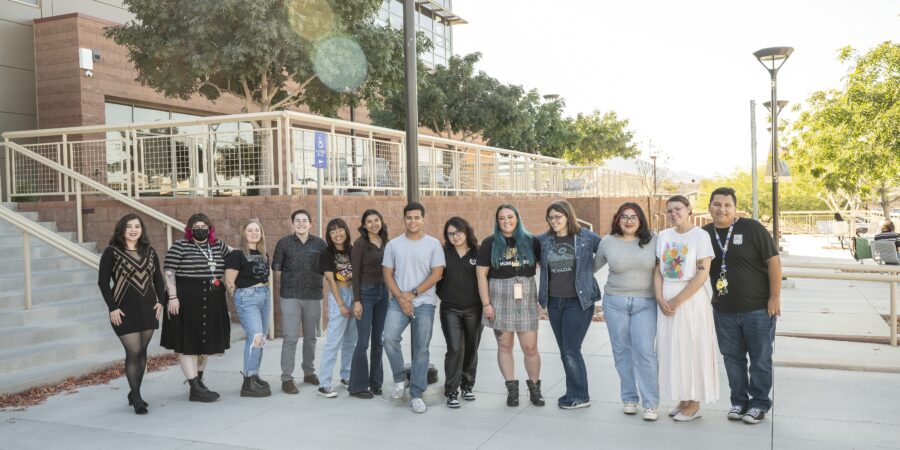
By Rachel Herzl-Betz and britty cox, Nevada State University—Once, my (Rachel’s) direct supervisor in the Provost’s Office asked whether we had ever presented on our writing center leadership structure. At the time, I laughed it off. Why would we talk about how we keep the trains running on time? As we (Rachel and britty) thought more, that idea connected to larger questions about writing center interdependence and the ways that we all get used to what we do. Like a grad student learning to teach […]
By Maya Osaka, University of North Carolina at Charlotte—”Sorry, can you repeat that?” // My client begins again—this is the second time I’ve asked them to do so during our session, and as their voice begins to fade away I know I’ll likely have to ask them to repeat themself for a third time. It is humiliating. With each moment where I struggle to pull their voice out of the never-ending tsunami of sensory stimuli it’s being washed away in, I can’t help but to think about… the lights, actually. Their dull fluorescence soaks into every bookcase, desk, and notepad. Even the grooves in the fabric covering of the cubicle walls, each detail drenching my brain in a haze of static.
By Kelle Alden, The University of Tennessee at Martin—Any university administrator will agree that accessible spaces are important, as they provide necessary services to disabled individuals and signify our commitment to equitable education. However, federal guidelines are complex, writing center staff are bound by political, financial, and practical constraints, and most people cannot imagine navigating […]
By Natalie White, Western Michigan University—A good writing center aims to be accessible to all students, regardless of race, gender, sexual orientation or disability; however, many of the conventional methods passed down between centers are based on those without barriers to communication. This tutoring style leaves students who are d/Deaf or hard of hearing (HOH) in a complicated position. However, a great writing center not only sees where barriers lie, but actively works to deconstruct them, especially […]
By Ellen Cecil-Lemkin and Lisa Marvel Johnson—As several scholars have already pointed out (Dembsey; Hitt; Kiedaisch and Dinitz to name a few), historically, the scholarship on disability in the writing center is… not great (to put it lightly). It’s seeped in ableism by positioning disabled writers as “other” and problems that need to be solved. This framing leads to positioning disabled students “as so radically different from other students that they are beyond help—that they require too much time, resources, or special knowledge” (Hitt). This perspective, however, goes beyond ableism that occurs on an individual level. […]
This academic year, the Writing Center was able to hire three new academic staff members, all of whom are recent graduates of UW-Madison’s PhD program in English. Below, we’ve asked them to respond to a series of questions with the hope that you, our readers, will be able to get to know them through their words. […]
By Amy Gaeta – As a fourth-year Ph.D. candidate in English, writing center tutor and student, I love to write. Even if it was not part of my job, like many people reading this blog, the writing process is where I continue to find myself. During my past two years of working in the writing […]
By Brenna Swift –