On Being Cringe: Hospitable Tutoring and Caring Too Much


Graduate Students, Student Voices, Tutorial Talk and Methods, Writing Center Theory, Writing Centers

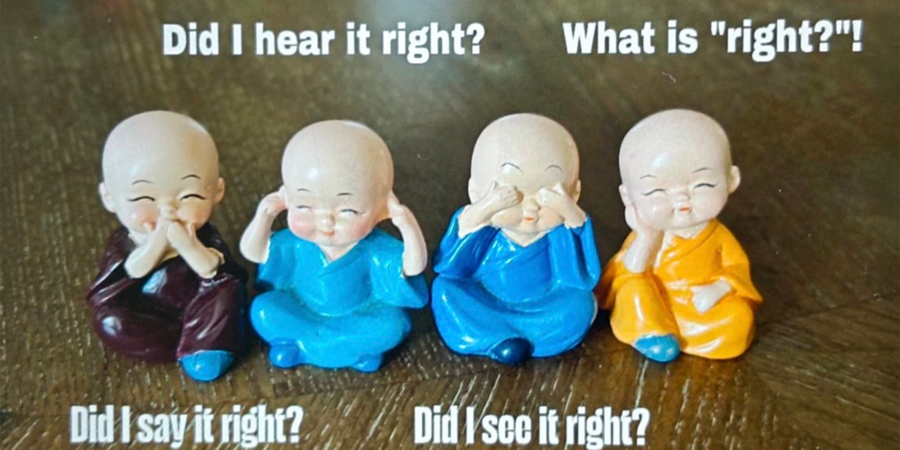
By Izzy Alexander, University of Tennessee, Knoxville—At a weekly training meeting for new consultants in the Judith Anderson Herbert Writing Center, my tutor trainer—Greta, a first-year Ph.D. student who researches tutor self-efficacy—asked us to solve the million-dollar writing center question: How can we get students to buy in to tutoring? How can we make students feel comfortable in the writing center? Instantly, I thought about how embarrassing writing is. It’s horrible to bring in your half-baked ideas and run-on sentences and show it to someone you perceive to be good at writing (whatever that is) and ask them to help you.

June 9, 2026

Writing Centers as Spaces of Recovery


Disability and Writing Centers, Diversity and Inclusion, Graduate Students, Social Justice, Writing Centers

By Maggie Hart, University of Minnesota—For many writers, and tutors, the writing center is a place to slow down, to rest, and to recover. // I began to understand the importance of recovery differently after completing treatment for blood cancer. Just a few months before I began graduate school, I was in a hospital room receiving chemotherapy for acute myeloid leukemia. Then, I was sitting in seminars, reading complex theory, and trying to think clearly again. I quickly learned that recovery is not the clean narrative we often imagine when we talk about “beating” illness. For me, and for many other survivors, recovery is slow and uneven. Some days are clear, productive, and focused, and others feel foggy and fragile. Progress happens, but sporadically. The body and mind renegotiate their capacities constantly. […]

May 12, 2026

How to Discuss GenAI in Writing Consultations


AI Writing, Graduate Students, Tutor Publications, Tutorial Talk and Methods, Writing Center Research, Writing Center Tutors, Writing Centers

By Brady Hall and Emma Bapst, Miami University of Ohio—AI has become part of our writing center ecosystems. Whether we like it or not, students use it in their processes. Some professors require it in their courses; others ban it completely. This leaves students caught in the middle, trying to satisfy competing interests. As students perform to try to satisfy their instructors, they are learning a “hidden curriculum,” or knowledge that travels behind the network of traditional classroom education with regard to AI. These contexts permeate writing center experiences as well. With coexisting perspectives of AI refusal and acceptance, it can be difficult for writing center consultants to feel comfortable addressing AI use with students at all. 

April 14, 2026

Academic Writing in the Borderlands


Graduate Students, Higher Education, Racial Justice, Social Justice, Writing Center pedagogy

By Andrea Hernandez Holm—Many writing assignments, genres, and reference styles require that writers include positionality statements. Some genres are entirely informed by positionality, even if we don’t recognize them. For example, personal statements ask the writer to explain what experiences have shaped their perspectives, objectives, and goals. Positionality can still be a difficult concept to grasp because we typically consider it only in the immediacy, and in relation to our own experiences—my positionality is informed by who I am. […]

November 4, 2025

Listening and Learning: The Exigence of Creating Community Through Feedback


Graduate Students, Higher Education, Student Voices, Tutor Training, Tutorial Talk and Methods, Writing Center Research, Writing Center Staff, Writing Center Tutors, Writing Centers

By Sam Hyatt and Meg Hultgren, University of South Carolina—As doctoral students serving as Assistant Directors (ADs) in the Writing Center (WC) at the University of South Carolina during uncertain academic times, we’ve had the unique opportunity to navigate leadership roles while still actively engaged in graduate study. Our tutoring staff is also distinctive—comprised entirely of English graduate students, primarily MAs and MFAs in their first year of school—which has shaped the collaborative and academic culture within our center. // Our overlapping roles as students, tutors, and leaders has been both challenging and rewarding, […]

May 13, 2025

Honoring the Writing Center’s Instructors: 2025 Awards for Excellence in Teaching


Awards and Honors, Graduate Students, Peer Tutoring, Writing Center Tutors

Each year, the Writing Center celebrates and honors the exceptional work of our teaching assistants by presenting two teaching excellence awards. Our team of over 35 teaching assistants work extremely hard to provide personalized, one-to-one writing instruction to more than 1,500 students. Beyond this work, they also contribute to the Writing Center’s mission by leading […]

April 29, 2025

Discontented with Just Western Consent: A Global Anglophone Perspective on Writing Center Professionalization via Global Rhetorical Traditions


Diversity and Inclusion, Graduate Students, Higher Education, Multilingual Writers, Writing Center pedagogy, Writing Center Staff, Writing Center Theory, Writing Centers

By Saurabh Anand, University of Georgia—As an international graduate student who speaks five languages and writes in three, I have survived multiple instances of North American writing epistemology hegemony across academic and professional situations. When they happened, such experiences surprised and frustrated me because […]

March 11, 2025

International to Intersectional: How Thinking about International Writing Center Tutors Can Make a Writing Center More Inclusive


Graduate Students, Multilingual Writers, Writing Center Conference, Writing Center Tutors

By Nattaporn Luangpipat, Samitha Senanayake, and Hadis Ghaedi, University of Wisconsin-Madison–At the 2022 International Writing Centers Association (IWCA) Conference in Vancouver, BC we  co-presented “Affordances and Challenges of International Writing Center Tutors.” Our roundtable attempted to understand the experiences of international writing center tutors, covering the affordances they bring and the challenges they face. We wanted to discuss how writing center stakeholders can raise awareness of international tutors and promote realistic expectations while reshaping their pedagogy to make international tutors aware of themselves as an asset and providing them with training and strategies to deal with possible challenges. […]

September 19, 2023

Creating Space: Building a Writing Center for Graduate Students


Covid, Graduate Students, Writing Center Tutors

By Dr. Yvonne Lee, Lehigh University—Working with graduate writers is currently a topic being discussed in the literature, and much of what is being discussed is the uniqueness and liminality of the situation in which graduate student writers find themselves (Jewell & Cheatle, 2021; Lawrence & Zawacki, 2018; Russell-Pinson & Jafarian, 2020; Simpson et al., 2016). To many, graduate writers should already be experts in writing in their fields. To others, they are novice insiders who are still learning the practices and expectations of their fields.  […]

September 6, 2023

A Lesson from Passive Voice


Graduate Students, Multilingual Writers, Peer Tutoring, Tutorial Talk and Methods, Writing Center Tutors

By Diego Alegría—How can we teach writing beyond questions around grammar, but through its very own instruments and problems? This question has guided the way I approach my writing center sessions. Here, I hope to trace a tentative answer by describing and analyzing a mentorship session that focused on the use of passive voice. In this session […]

July 18, 2023