Writing Centers as Spaces of Recovery

Disability and Writing Centers, Diversity and Inclusion, Graduate Students, Social Justice, Writing Centers

By Maggie Hart, University of Minnesota—For many writers, and tutors, the writing center is a place to slow down, to rest, and to recover. // I began to understand the importance of recovery differently after completing treatment for blood cancer. Just a few months before I began graduate school, I was in a hospital room receiving chemotherapy for acute myeloid leukemia. Then, I was sitting in seminars, reading complex theory, and trying to think clearly again. I quickly learned that recovery is not the clean narrative we often imagine when we talk about “beating” illness. For me, and for many other survivors, recovery is slow and uneven. Some days are clear, productive, and focused, and others feel foggy and fragile. Progress happens, but sporadically. The body and mind renegotiate their capacities constantly. […]

Continue Reading

How to Discuss GenAI in Writing Consultations

AI Writing, Graduate Students, Tutor Publications, Tutorial Talk and Methods, Writing Center Research, Writing Center Tutors, Writing Centers

By Brady Hall and Emma Bapst, Miami University of Ohio—AI has become part of our writing center ecosystems. Whether we like it or not, students use it in their processes. Some professors require it in their courses; others ban it completely. This leaves students caught in the middle, trying to satisfy competing interests. As students perform to try to satisfy their instructors, they are learning a “hidden curriculum,” or knowledge that travels behind the network of traditional classroom education with regard to AI. These contexts permeate writing center experiences as well. With coexisting perspectives of AI refusal and acceptance, it can be difficult for writing center consultants to feel comfortable addressing AI use with students at all. 

Continue Reading

Supporting Tutors and Writers Amid Heightened Risk: Navigating Writing Center Work in the U.S., 2026

AI Writing, Higher Education, Tutorial Talk and Methods, Undergraduate Students, Writing Center pedagogy, Writing Center Tutors, Writing Centers

By Anonymous—The field has long emphasized the collaborative ethos of writing center work (Harris, 1988; Lunsford, 1991). Within this framework, writing centers are often positioned as “safe” or “low-stakes” environments where writers can experiment, explore identities, and develop confidence in their voices (McNamee & Miley, 2017). But the ability of writing centers to function as “low-stakes” environments depends on the broader social conditions in which writers and tutors live. […]

Continue Reading

Finding Universal Design for Learning in Your “Tough” Tutoring Session

Disability and Writing Centers, Diversity and Inclusion, Tutorial Talk and Methods, Writing Center pedagogy, Writing Center Theory, Writing Center Tutors, Writing Centers

By Anmol Sahni, Emory University—Last semester at the Emory writing center, I had one of those tutoring sessions that just felt… off. It began the usual way: greeting the writer, setting an agenda, and planning to read the draft together. These practices often work well—but that day, something wasn’t clicking. The student wasn’t disengaged, but I sensed a kind of resistance, or maybe fatigue, that the standard approach wasn’t addressing. […]

Continue Reading

Writing Centers as Attention Technology

Disability and Writing Centers, Peer Tutoring, Tutorial Talk and Methods, Writing Center pedagogy, Writing Center Tutors, Writing Centers

By Tisha Turk, Grinnell College—In recent years, attention has come in for a lot of, well, attention. Scholars, journalists, and cultural critics have written about how corporations capture and monetize the finite resource of our attention and, sometimes, how we can regain control of it (Wu; Odell; Hari; Hayes). Those of us working in institutions of higher ed have probably observed the effects of attention capture not only on ourselves but on our students. My observations about attention are not […]

Continue Reading

Academic Writing in the Borderlands

Graduate Students, Higher Education, Racial Justice, Social Justice, Writing Center pedagogy

By Andrea Hernandez Holm—Many writing assignments, genres, and reference styles require that writers include positionality statements. Some genres are entirely informed by positionality, even if we don’t recognize them. For example, personal statements ask the writer to explain what experiences have shaped their perspectives, objectives, and goals. Positionality can still be a difficult concept to grasp because we typically consider it only in the immediacy, and in relation to our own experiences—my positionality is informed by who I am. […]

Continue Reading

Language Usage Liberation: Applying Rhetorical Grammar in a Tutoring Session

Higher Education, Tutor Training, Writing Center pedagogy, Writing Center Research, Writing Center Tutors, Writing Centers

By Susanne Treiber—Yet again a student arrives in the Writing Center determined to be successful in their intensive writing course, ready to learn how to improve their writing, and let’s face it, improve their paper. […]

Continue Reading

Another Word CFP 2025

Updates, Writing Center Research

Another Word, the award-winning writing center blog from the University of Wisconsin–Madison, is currently seeking proposals for blog posts to be published in 2026. We seek proposals from those invested in writing center studies on a broad range of topics related to administering, tutoring, training, and working in the writing center. 

Continue Reading

Embracing Critique, Finding Trust

Tutor Training, Writing Center Tutors

By Laura Widman, Hamilton College—This past year, I designed fall tutor training with our WC director, focusing on creating opportunities to learn and build community around a central theme: Interrogating Power. I had led numerous trainings on multilingualism and metalanguage in tutoring, but this was the first opportunity I had to plan training from the ground up and to lead large portions of it myself. I was excited to explore training topics further outside of my niche, and to see how our new tutors engaged with training and our WC community. […]

Continue Reading

Dear Future Writing Tutor

Diversity and Inclusion, Multilingual Writers, Peer Tutoring, Racial Justice, Social Justice, Tutor Publications, Writing Center Tutors, Writing Centers

By Anonymous—Do you remember when you were a kid and the idea of going to college sounded like the most sophisticated milestone you could think of? Starstruck by the idea of being rewarded for learning through open acknowledgement of your contribution to English– because you always loved reading and writing, language was a toy and a tool and a comfort– sounded more glamorous than a cover of Vogue. Do the memories taste bittersweet to you too? […]

Continue Reading

ReConnecting the Centers

From the Director, Higher Education, Writing Center Staff, Writing Centers

By Khristeena Lute, SUNY Adirondack—Like many newly minted writing center directors, when I stepped into my first role of Director, I envisioned a hive of activity in this new-to-me center, with engaged conversations about tutoring, connecting with local campuses and their writing centers, and general collaboration all around. I made headway in other areas of my scholarship—literary criticism, creative nonfiction, and even a novel—but I still hadn’t quite found my writing center niche. // Instead, I faced one emergency after another after another (family tragedies, pandemic shifts, and the daily challenges that fill our email inboxes)—with each one leaving me feeling smaller and quieter. […]

Continue Reading

Listening and Learning: The Exigence of Creating Community Through Feedback

Graduate Students, Higher Education, Student Voices, Tutor Training, Tutorial Talk and Methods, Writing Center Research, Writing Center Staff, Writing Center Tutors, Writing Centers

By Sam Hyatt and Meg Hultgren, University of South Carolina—As doctoral students serving as Assistant Directors (ADs) in the Writing Center (WC) at the University of South Carolina during uncertain academic times, we’ve had the unique opportunity to navigate leadership roles while still actively engaged in graduate study. Our tutoring staff is also distinctive—comprised entirely of English graduate students, primarily MAs and MFAs in their first year of school—which has shaped the collaborative and academic culture within our center. // Our overlapping roles as students, tutors, and leaders has been both challenging and rewarding, […]

Continue Reading

Honoring the Writing Center’s Instructors: 2025 Awards for Excellence in Teaching

Awards and Honors, Graduate Students, Peer Tutoring, Writing Center Tutors

Each year, the Writing Center celebrates and honors the exceptional work of our teaching assistants by presenting two teaching excellence awards. Our team of over 35 teaching assistants work extremely hard to provide personalized, one-to-one writing instruction to more than 1,500 students. Beyond this work, they also contribute to the Writing Center’s mission by leading […]

Continue Reading

Discontented with Just Western Consent: A Global Anglophone Perspective on Writing Center Professionalization via Global Rhetorical Traditions

Diversity and Inclusion, Graduate Students, Higher Education, Multilingual Writers, Writing Center pedagogy, Writing Center Staff, Writing Center Theory, Writing Centers

By Saurabh Anand, University of Georgia—As an international graduate student who speaks five languages and writes in three, I have survived multiple instances of North American writing epistemology hegemony across academic and professional situations. When they happened, such experiences surprised and frustrated me because […]

Continue Reading

Working Across Time Zones

International Writing Centers, Undergraduate Students, Writing Center Tutors, Writing Centers

By Melisa Mansuroglu, University of Connecticut—During the summer of 2023, my director at the University of Connecticut writing center, Tom Deans, presented me with the opportunity to extend a project that he helped create while a Fulbright Scholar at Uganda Christian University (UCU) in 2021-22 (Deans). Tom’s goal was to help UCU establish […]

Continue Reading

Writing at the Center of the Neoliberal University

Higher Education, UW-Madison History, Writing Center History, Writing Centers

By Emery Jenson—Writing in 1990, Diana George and Nancy Grimm warned that “writing centers whose programs have expanded to meet university needs” would need to contend with the danger of being “co-opted by the larger system.” Ten years later, at the turn of the century, Lisa Ede and Andrea Lunsford express a similar concern for how the “important scholarly and pedagogical work” of writing centers risks being devalued “as mere academic service” within the expanding structure of the University. […]

Continue Reading

Moving Closer, Never Reaching: Translation as Writing and Tutoring Practices 

Multilingual Writers, Peer Tutoring, Writing Center Tutors

By Xiran Tan, Wesleyan University—My linguistic and physical existence feels much like the in-between space between the asymptote and the curve. The former infinitely approaches the latter yet never touches. Pulled back and forth between Mandarin and English, and drifting away from my first language Cantonese, which was not allowed in Chinese public schools […]

Continue Reading

The Elephant in the Center: The Question of Workshops

Writing Center pedagogy, Writing Centers

By Jennifer Rupp, University of Kansas—You’ve spent hours creating a new workshop that you are genuinely excited about – it’s both informative and fun! Then, it’s two minutes to go-time. One student walks through the door. You anxiously smile and say, “We’ll just wait a few more minutes to see if anyone else shows up.” They don’t. Now you both feel awkward […]

Continue Reading

Video Narratives in Training

Technology, Tutor Publications, Tutor Training, Writing Center pedagogy, Writing Center Tutors, Writing Centers

By Katie Layendecker, Carthage College—When our director asked my co-trainer and me if there was anything we’d like to change about our training program, we knew we wanted to modernize it in a way that was both informational and fun. We couldn’t forget that, for the most part, our audience is first-year students who don’t know what a writing center is like. The new tutor training program at our writing center is led by experienced tutors and has been more or less unchanged for the past four years. This means […]

Continue Reading

Rebuilding a Research Culture Of, By, and For Our Students


Tutor Training, Writing Center pedagogy, Writing Center Research, Writing Center Tutors, Writing Centers

By Alexa Quezada, Indiana University Indianapolis—During the summer of 2022, my campus’s University Writing Center underwent a series of changes that massively impacted the culture of the Center, including our approach to research. We lost both our director and assistant director in rapid succession. Subsequently, roughly a third of our student consultants quit in a combination of solidarity and worry that the UWC—and their jobs—would not exist by the beginning of the fall semester. Just before the semester began […]

September 17, 2024

A Survey-Based Study Exploring Required Writing Center Visits at a SLAC


Classes, Higher Education, Tutorial Talk and Methods, Undergraduate Students, Writing Center Research, Writing Centers, Writing Fellows

By Eve Brunell, Estella Davis, Jay Fowler, Caroline Host, Dylan Howell, Emily Jackson, Olivia Jackson, Evan Paden, Olivia Sparks, Ellie Thornsbury, Erika Williams (under the direction of Dr. Scott Whiddon, Transylvania University)—In Fall 2023, Transylvania University Writing Center (TUWC) partnered with four undergraduate courses—theater, philosophy, sociology, and writing/rhetoric/communication—to support writers working within a range of genres and assignment types. In each of these partnerships, enrolled students were required to work with a TUWC undergraduate peer writing consultant at least two times to support understanding prompts, brainstorming possible pathways, developing drafts, and considering revision strategies. […]

August 20, 2024

ChatGPT and Writing Center Tutors: Establishing a “both/and” Relationship


AI Writing, Multilingual Writers, Peer Tutoring, Technology, Writing Center pedagogy, Writing Center Tutors, Writing Centers

By Jun Akiyoshi, The Pennsylvania State University, and Rajwan Alshareefy, University of Delaware—Both of us, Jun and Rajwan, have similar backgrounds. We worked as EFL/ESL teachers, studied in an interdisciplinary area of Composition and Applied Linguistics, enjoyed talking about research and practice of writing education, and most importantly, we worked together at the same writing center when we were graduate students. Even after we earned our Ph.D.s, we continued to engage with, learn about, and research (writing) education. Throughout the years, we often talked about the theory and praxis of (college) writing, second language education, among many others. Our conversations became more heated when […]

August 13, 2024

A Collective Center for Communal Care


Disability and Writing Centers, Diversity and Inclusion, Peer Tutoring, Tutor Training, Undergraduate Students, UW-Madison Writing Center Alumni Voices, Writing Center Staff, Writing Center Tutors, Writing Centers

By Rachel Herzl-Betz and britty cox, Nevada State University—Once, my (Rachel’s) direct supervisor in the Provost’s Office asked whether we had ever presented on our writing center leadership structure. At the time, I laughed it off. Why would we talk about how we keep the trains running on time?  As we (Rachel and britty) thought more, that idea connected to larger questions about writing center interdependence and the ways that we all get used to what we do. Like a grad student learning to teach […]

July 23, 2024

Looking Back, Looking Ahead: Analyzing the History of Lafayette’s College Writing Program


Events, Higher Education, Student Voices, Undergraduate Students, Writing Center Staff, Writing Centers

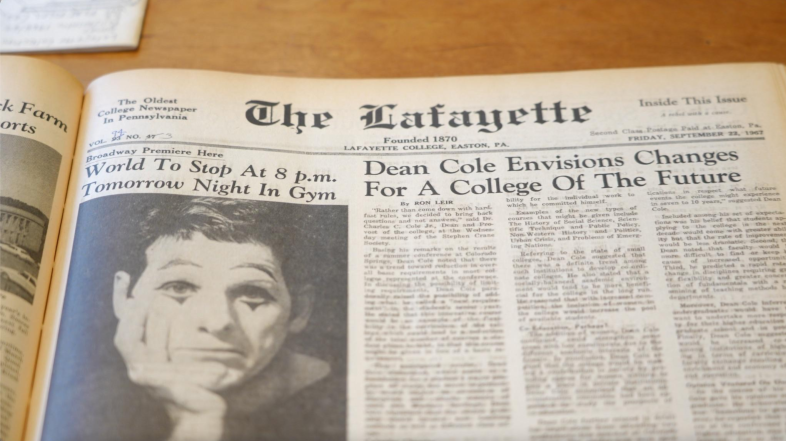
By McKenna Graf and Emma Hetrick, Lafayette College—Students and faculty of the Lafayette College Writing Program (CWP) have been embarking on a journey through their history. Leading with passion, we have been investigating how we operated in the past and how that might inform and improve our future. In Fall 2023, we started by gathering information on alumni, sorting through archival material about writing all over campus, and interviewing past employees of the program. With these seedlings of our project, we were able to present our research at the historic Hotel Bethlehem on Friday, January 12, 2024.

July 16, 2024

Tutor Identity: Learning from Preservice Teachers’ Tutoring Experiences


Tutor Training

By Rasha Alkhateeb, Loren Jones, and Alison Jovanovic, University of Maryland, College Park—Writing center tutors are teachers of writing. As tutors identify their reflexive writing identities, or how they understand their identity as writers and teachers of writing, they negotiate how writing is positioned as a meaning-making process in their sessions (Ryan). The process of developing a writer and teacher identity makes writing tutoring spaces valuable for preservice teachers who  are learning how to work alongside students.[…]

June 25, 2024

Honoring the Writing Center’s Instructors: 2024 Awards for Excellence in Teaching


Awards and Honors, Writing Center Tutors

Since 2016, the Writing Center has recognized the outstanding contributions of our teaching assistance through teaching excellence awards. Our team of over 30 highly skilled teaching assistants, who are enrolled in either master’s or doctoral degree programs, provide one-to-one writing instruction to students. In addition to this, they actively participate in campus-wide outreach initiatives, lead […]

May 14, 2024

Embedded Meditation and Mindfulness: An Intentional Turn in Tutor Training


Peer Tutoring, Tutor Training, Undergraduate Students, Writing Across the Curriculum, Writing Fellows

By Lucy McInerney and Jenna Morton-Aiken, Brown University—If you were to walk into the Writing Fellows training classroom at Brown University at three minutes past 1:00 p.m. on any given Tuesday, you would find a darkened room littered with the bodies of students in repose. As you blinked down in confusion at the student closest to you, her head propped […]

April 2, 2024

Not Quite Your Writing Clinic: Experimentations with a Caring Writing Curriculum amid “the Liberal Education Crisis”


Tutor Training, Writing Center pedagogy, Writing Centers

By Shaoxuan Tian, Wesleyan University—I forget when and how Lauren—my supervisor and colleague at Wesleyan University’s writing center—and I started to use the phrase “writing trauma.” // “Another sad one with some writing trauma,” she commented on one response to the “How do you describe your relationship with writing?” question in our Writing Mentor program’s application. […]

March 12, 2024

Reuniting in the Write Place: Rediscovering Community at the IWCA Collaborative


IWCA, Writing Center Conference, Writing Centers

Introduction by Jennifer Conrad and Ellen Cecil-Lemkin—The 2023 IWCA Collaborative took place in Chicago on Wednesday, February 15 and marked our first return to in-person conferencing since 2019, the year prior to the onset of the COVID-19 pandemic. The original call for proposals centered on a consideration of “writing center relationships, partnerships, and coalitions,” as well as the benefits of shared embodied presence with colleagues across the field of writing center studies. For us, there was a special energy about returning to a shared physical space, getting to see […]

February 27, 2024